10 things
I recently pulled a year of scheduling data from speech therapy private practices on Ambiki, April 2025 through March 2026, and looked closely at every visit that didn't happen.
Some of what I found matched what any practice owner would guess. A surprising amount of it didn't. Here are ten interesting observations:
- Nearly 1 in 3 missed visits is the clinic's own cancellation (31.8%). Silent no-shows, the thing everyone fears, are only about 10%.
- Saturday is the most-cancelled day at 25.3%, about 1.5 times a typical weekday (16-18%).
- About 1 in 6 therapy visits is cancelled (17.5%), and more than 1 in 5 (21.5%) is missed once no-shows and absences are counted. Only 74% are attended.
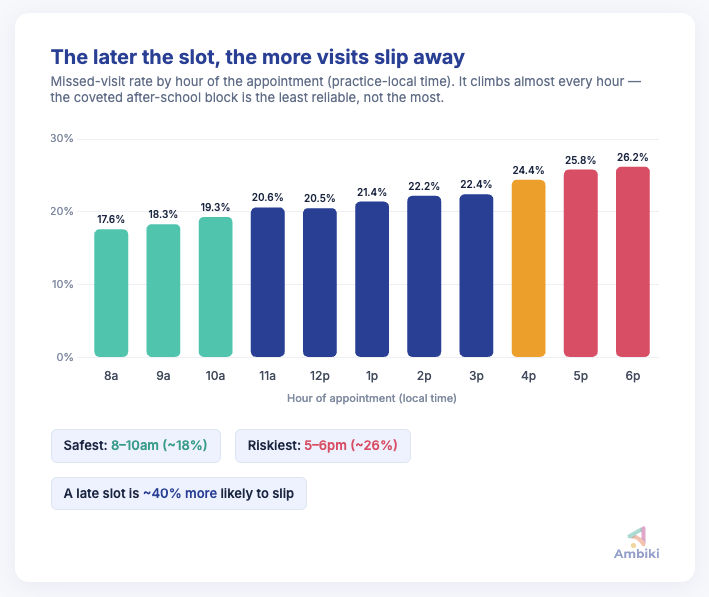
- The later in the day, the more visits slip: a 4-6pm slot is missed about 40% more often than a mid-morning one (26% vs. 18%). The prized after-school block is the riskiest.
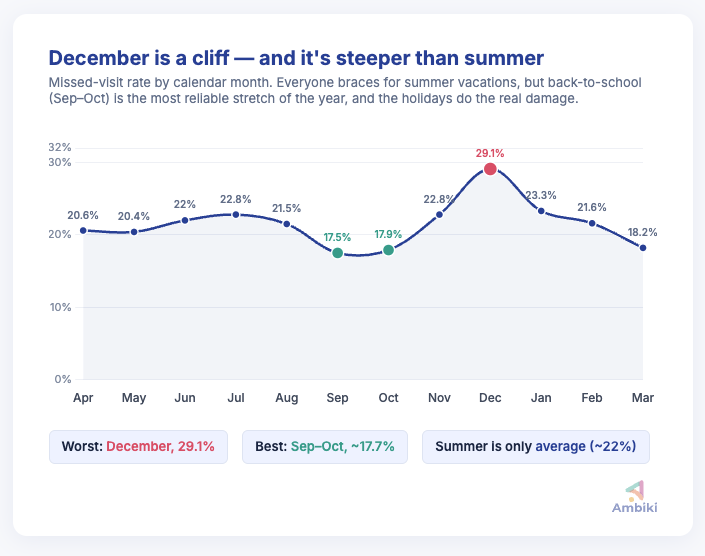
- December is the worst month (29% missed); September and October are the most reliable (around 18%). The holidays hurt more than summer does.
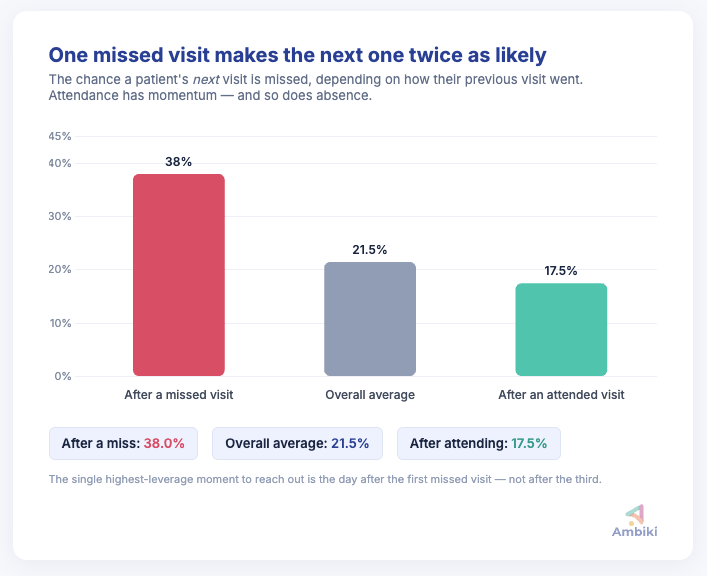
- Missed visits are contagious: right after a miss, the next visit is missed 38% of the time, more than double the 17.5% seen after an attended one.
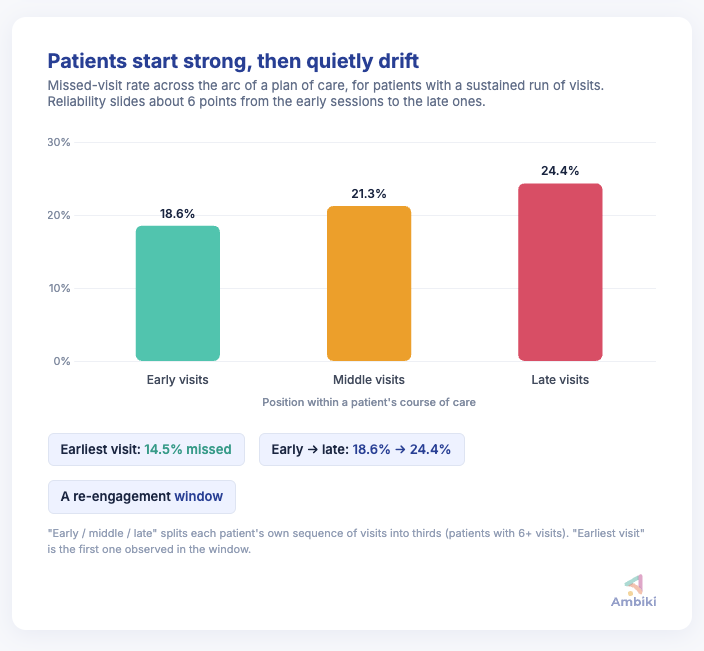
- Reliability erodes over a plan of care, from 18.6% missed early to 24.4% late. A patient's earliest visit is their most reliable (14.5%).
- A fifth of patients drive two-thirds of cancellations (the top 20% account for 67%). Meanwhile, 32% of patients never cancel once.
- Standing weekly slots are missed about twice as often as one-off visits (26.5% vs. 12.6%), and they make up two-thirds of the schedule.
- Among busy weekdays, Monday and Thursday leak the most (around 22.5%); Tuesday holds best (20.1%).
The thread running through all ten is that missed visits aren't random. They cluster by hour, by month, by patient, and by momentum. A practice can't call families in December and beg them to skip fewer sessions, but it can front-load plans of care, protect the mid-morning block for its shakiest patients, and reach out the day after the first miss instead of the third.
Want to see what your own schedule is hiding? Schedule a demo of Ambiki: https://ambiki.com/emr/demo