Beyond software
I've been digging into visit note data across Ambiki, and something jumped out.
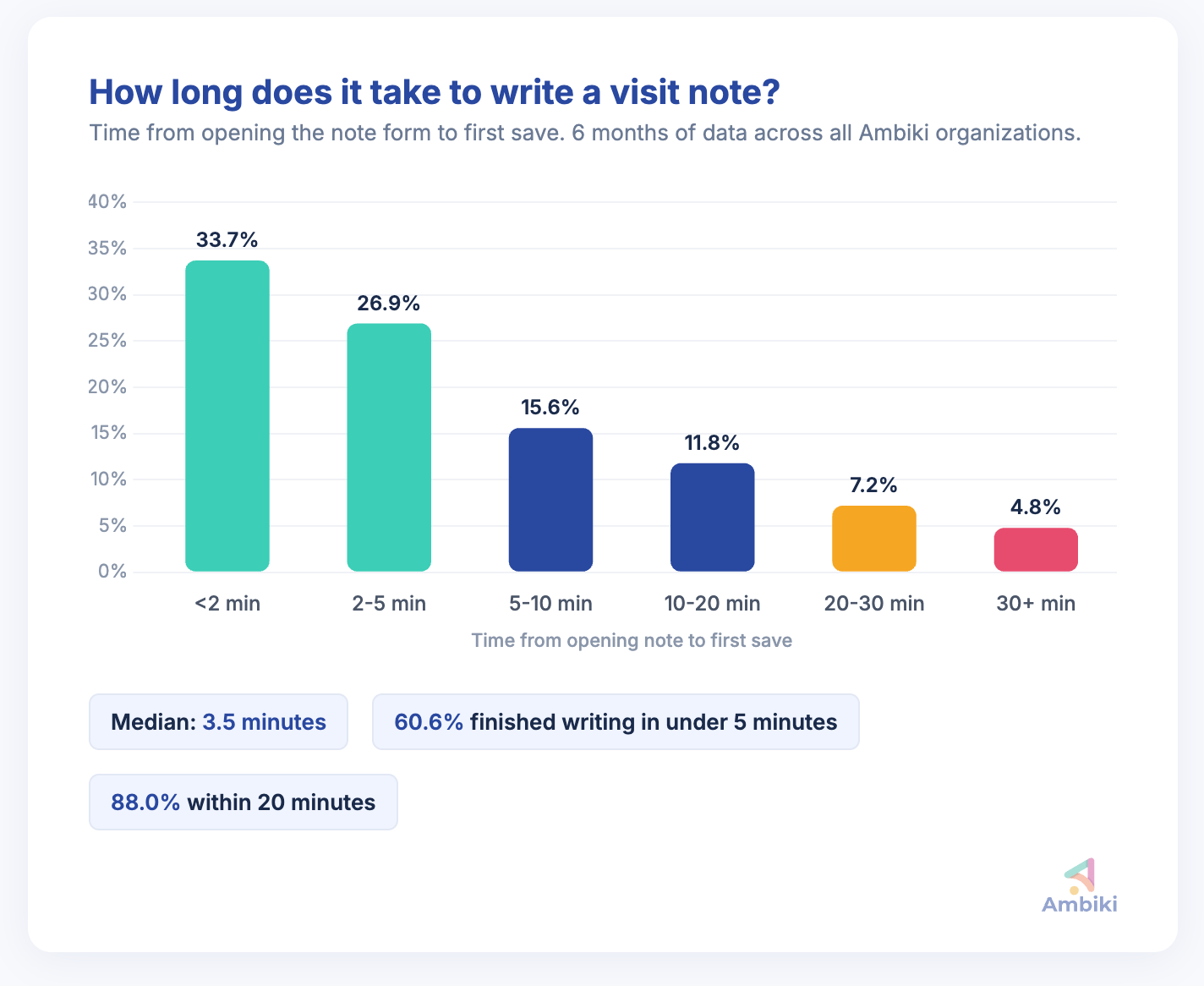
The median therapist spends about 3.5 minutes actively writing a note. Over 60% finish in under 5 minutes. So far, so good.
What caught my eye was the gap between practices.
The fastest quartile has a median note turnaround of 2.8 minutes, from opening the note to signing it. The slowest quartile sits at 23.2 minutes. Same software, same core workflows, 8.4x apart.
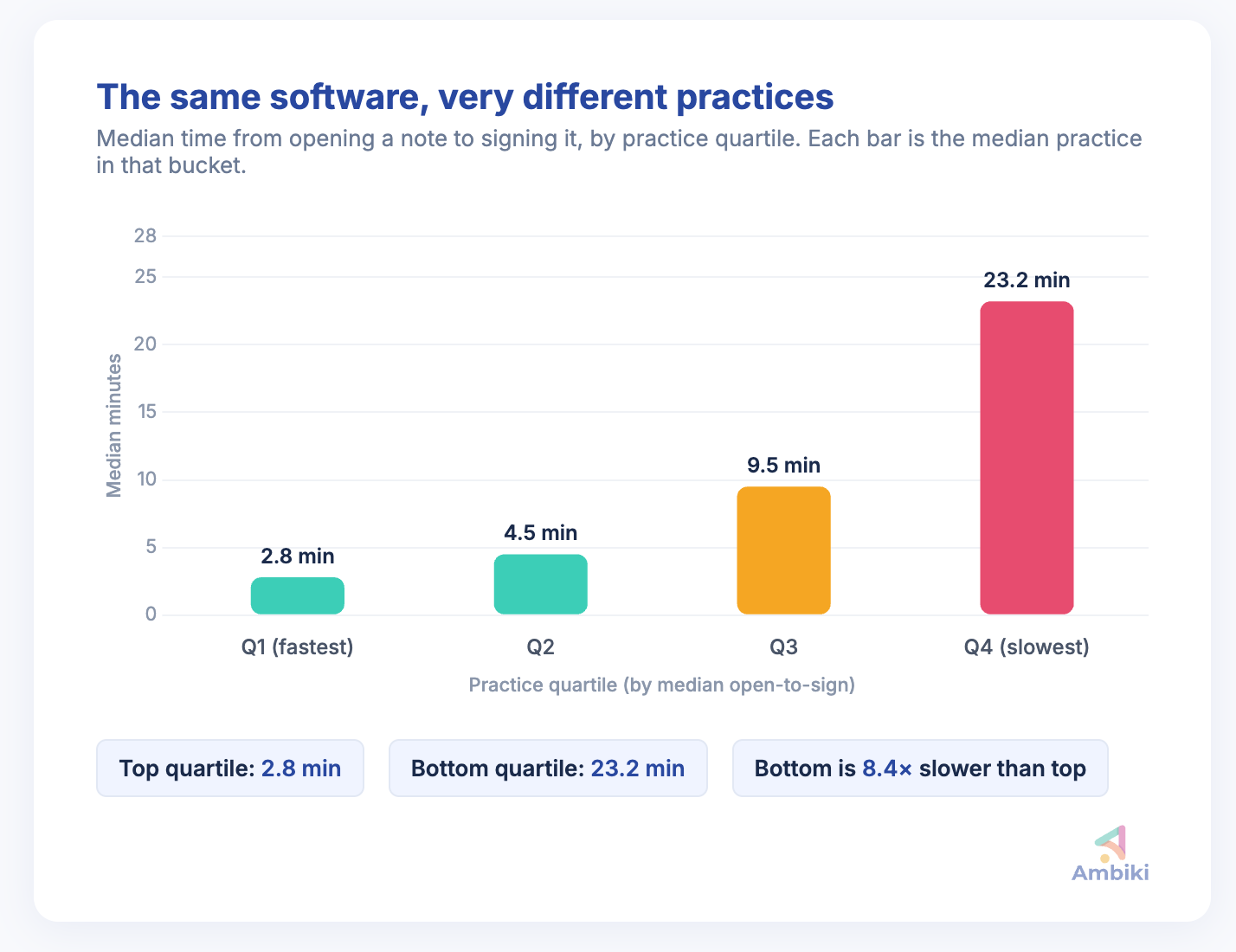
2.8 minutes feels close to the floor. Much faster than that and I'd worry you're moving too quickly to actually apply clinical judgment or proof what you wrote. The slow end has real room for improvement, and most of it shows up in how practices run their day: when notes get written, how clinicians stay in flow, and whether notes get finished before the workday ends.
Which raises a question: can I study how the top-quartile practices have set up their operations, therapist training, and internal workflows, and bring those patterns to everyone else?
Better tools clearly matter. But the fastest practices aren't just using Ambiki. They've built rhythms around when notes happen, how caseloads are balanced, and how notes get closed before they pile up into tomorrow's problem.
The slower practices still get the work done. It just leaks out of the day and risks turning into administrative drag. A few minutes per note doesn't sound like much, but across thousands of visits it shows up as clinician capacity, billing speed, and eventually burnout.
We'll keep making the software better. But I'm increasingly curious about what those top-quartile practices are doing that isn't in the product itself.