Blind spot
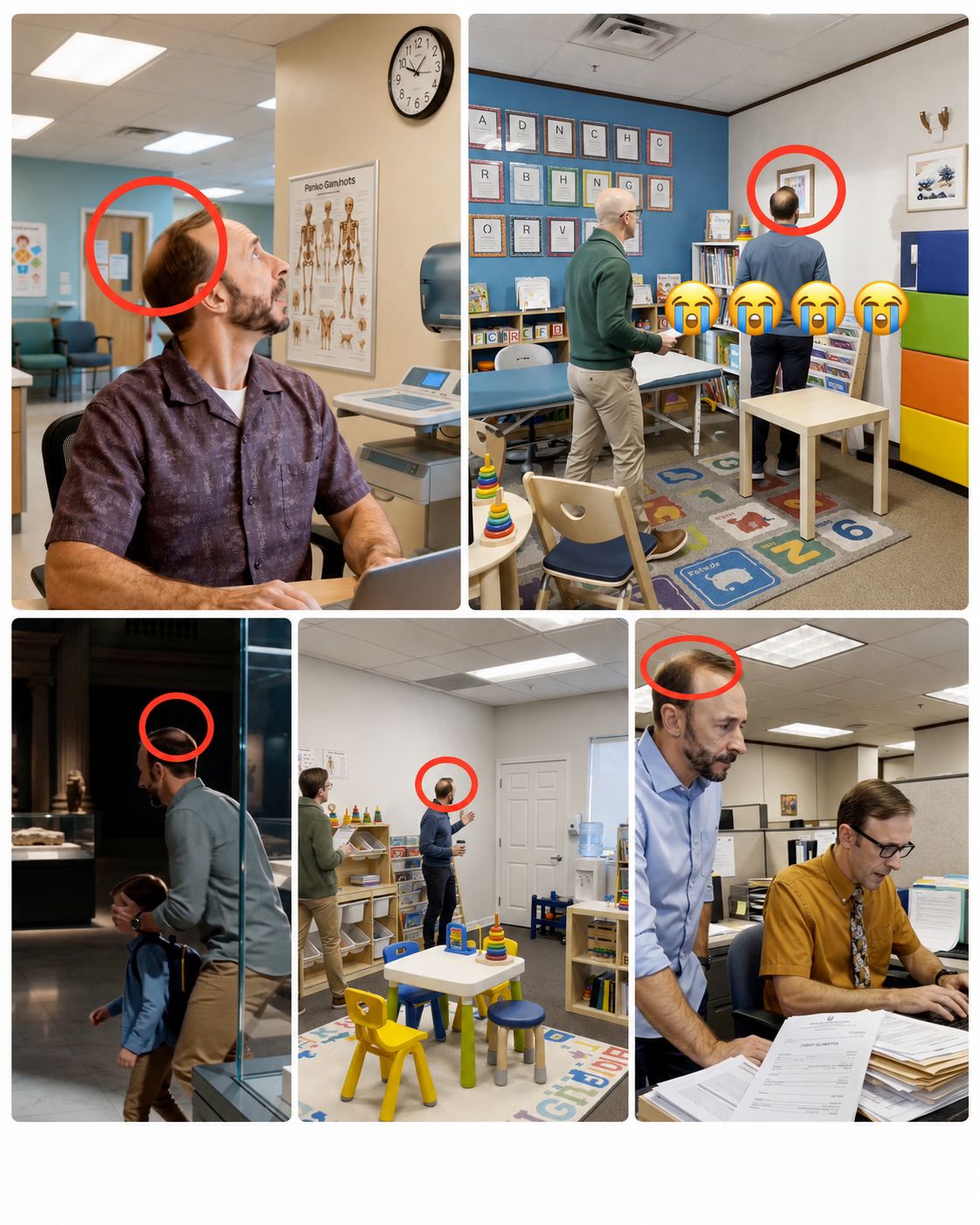
Last year, I gave a talk at ASHA about bias in AI. Apparently, AI took that personally.
For the past month, I've been using AI to help create fun short videos for Ambiki. No matter how clearly I describe myself, and even when I specifically prompt, "Do not make me bald. Character is NOT bald in the back," AI looks at a photo of me from the front and confidently assumes there is nothing happening in the back.
At the American Speech-Language-Hearing Association (ASHA) 2025 Convention, I was part of a team that gave a presentation titled "AI in Speech-Language Pathology: Who's in Control?" We talked about some of the real and important ways bias can appear in AI systems, particularly when those systems are used in speech-language pathology.
I don't remember male-pattern baldness being one of our examples.
So consider this my public service announcement to SLPs everywhere:
- Be careful with AI.
- Question its assumptions.
- Watch for bias.
And never let it generate a rear camera angle.