Headcount
There's a shortage of SLPs. Hiring is hard. Both true. Both incomplete.
I pulled staffing data from pediatric therapy practices on Ambiki to see how they actually build their teams. Five things stood out.
1) They grow and almost never shrink. Among established practices with 5+ therapists, the median team grew 25% year over year, and the top quarter grew 70%+. None lost net headcount.
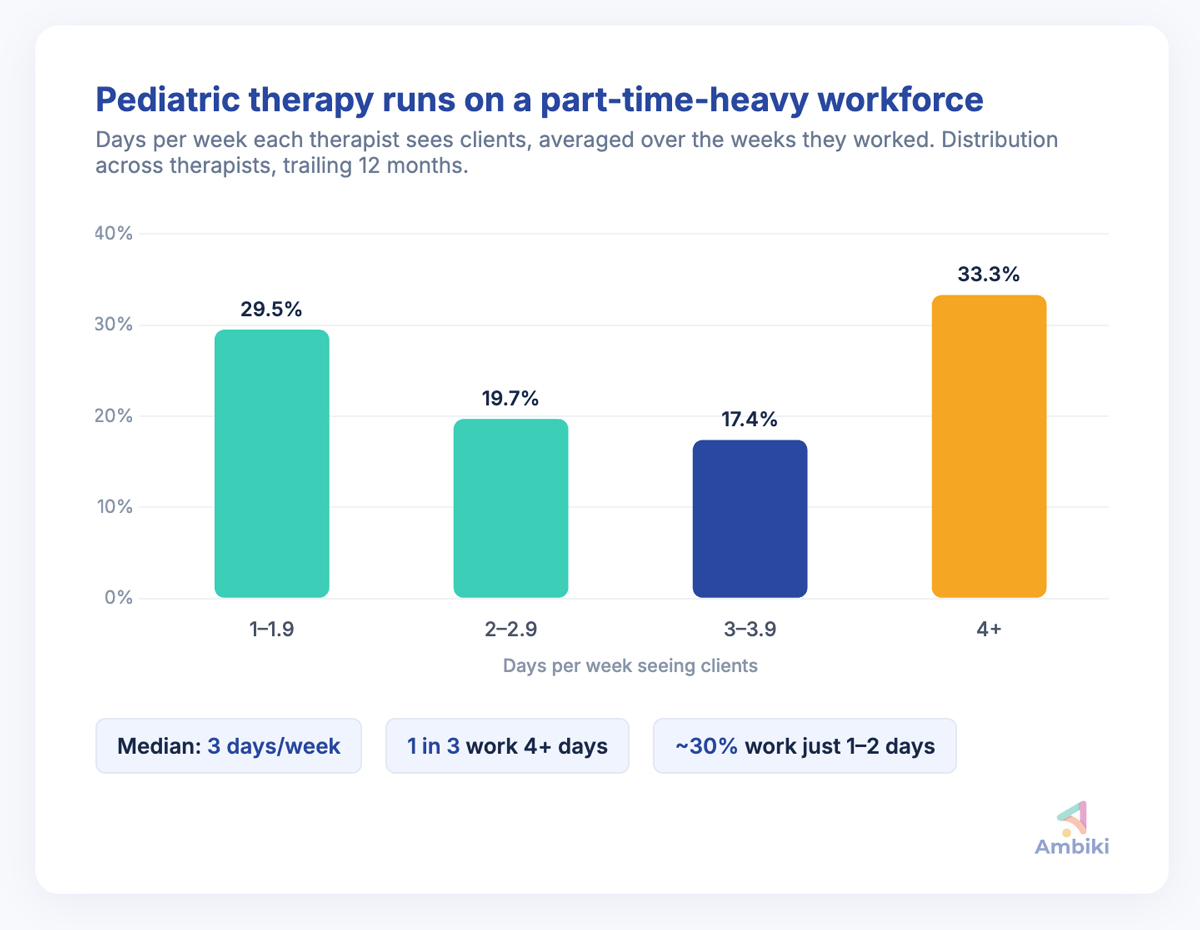
2) It's a part-time profession. Only about a third of therapists see clients 4+ days a week. Nearly a third work just 1–2 days. The median is 3.
3) The workload gap inside a single practice is bigger than you'd guess. The busiest therapist runs about 2.6x the daily session load of the least busy.
4) Scale buys leverage. In a 2–4 person practice, half the team carries an admin role. By 10+ therapists, it's under 6%, roughly a 9x difference. Grow the team and more of everyone's time goes to billable therapy instead of back-office work.
5) Hiring is winning. Across established practices, new hires made up about 31% of headcount in 2025 against ~8% turnover. That's four hires for every departure.
The usual story, that pediatric therapy is hard to staff, misses what's actually happening. Growing practices seem to have attacked the staffing shortage by getting creative: hiring more part-time and PRN therapists to fill the gaps. The teams are growing. They're just growing on a part-time, uneven base. That makes scheduling and workload balance two of the more challenging management problems for a growing practice.
If you run a practice: how do you balance the mix of full-time therapists at 6+ sessions a day and part-timers at 1?