Hidden connections
One of the more interesting product catch-22s I ran into when I first started at a speech therapy company in late 2018 came from documentation.
We wanted to make visit notes easier and faster for therapists to complete.
Except there was a problem. The easier you make it to reuse documentation, the easier it also becomes to accidentally carry something forward that didn't actually happen or didn't belong in that particular session. Or worse, to intentionally create fraudulent documentation.
Insurance fraud is relatively rare, but it does happen. A classic example is billing for a session that never took place and then copying and pasting the same note over and over again.
Practice compliance teams will sometimes audit for these "cloned notes" by manually reviewing documentation and looking for suspicious similarities.
So we had a bit of a catch-22. We wanted to give therapists leverage by letting them easily start from a previous note for the same patient. But the easier we made that, the greater the risk of accidentally carrying forward inaccurate information, creating notes that looked cloned, or making actual fraud easier.
So I started thinking about where else I'd seen this problem. Not healthcare.
Translation. Before joining the speech therapy company, I built TM-Town, a platform for professional translators. One of the problems we worked on there was document similarity. We analyzed documents to determine what they were about and match highly specialized translators with the right projects.
Different industry. Completely different use case. Very similar underlying problem.
If we could measure how similar two translation documents were, why couldn't we measure how similar two therapy notes were?
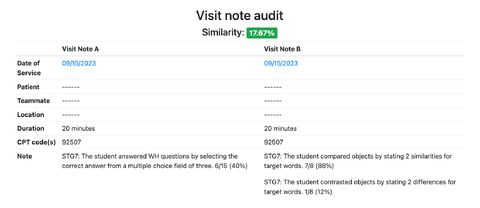
That became the idea behind a cloned notes tool. Instead of an audit team digging through hundreds or thousands of notes, the system could analyze a therapist's documentation and flag notes with unusually high similarity.
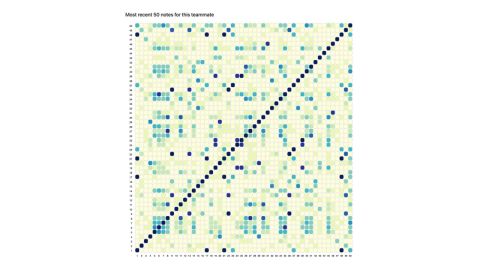
The compliance team could then compare those notes side by side and decide whether there was actually an issue.
Years later, how I came to this idea became one of the principles we built into Ambiki as our fourth value: Seek hidden connections.