Human help
I signed up for a new SaaS product last month and had a question. I clicked "Support," got routed to a chatbot, typed my question, received a canned response that didn't answer it, got asked to rephrase, tried again, got the same answer, and eventually gave up. The whole exchange took twelve minutes and resolved nothing.
At Ambiki, when a practice owner or therapist clicks the support button, they get a human. A real one.
I pulled our Q1 numbers to see what that actually looks like. In the first quarter of 2026, our support team wrote over 2,000 responses to over 700 support conversations. Joaquin, Amanda, Sam, Susan, and Myra handled the bulk of it. Twelve real people responded to messages in total (everyone from the sales team to the dev team, myself included), but those five carried the weight, day after day, question after question.
The questions aren't simple. A therapist wants to set up co-signatures for their CF supervisee across all documentation. An admin is migrating from another system and needs EDI enrollment configured for five different payers, each with different taxonomy and billing requirements. A solo practitioner asks which NPI and taxonomy to use when they're credentialed both individually and under a group. Another is switching systems entirely and has three years of patient data to bring over. These aren't FAQ lookups. They require someone who understands the intersection of clinical workflows, insurance billing, and the software itself. Someone who can look at a specific patient's ledger, trace a claim through the clearinghouse, and explain what happened in plain language.
Beyond the in-app messages, the team spent over 36 hours on live calls during the quarter. Twenty-seven of those calls were implementation and onboarding sessions, each averaging over an hour, each one-on-one with a specific practice. Admin training, therapist training, billing setup, data migrations, EDI configuration. Every practice got a person who walked them through their particular situation.
There is a version of this that scales more efficiently. You build a chatbot. You write a knowledge base. You add ticket deflection and measure success by how many questions never reach a human. We would rather know how many practices trust us enough to ask.
Pediatric therapy is not a domain where generic answers work. A billing question from a speech therapy practice in Texas looks different from one in New York. A clinic with three therapists has different workflow needs than one with thirty. The people answering these questions need context, not just scripts.
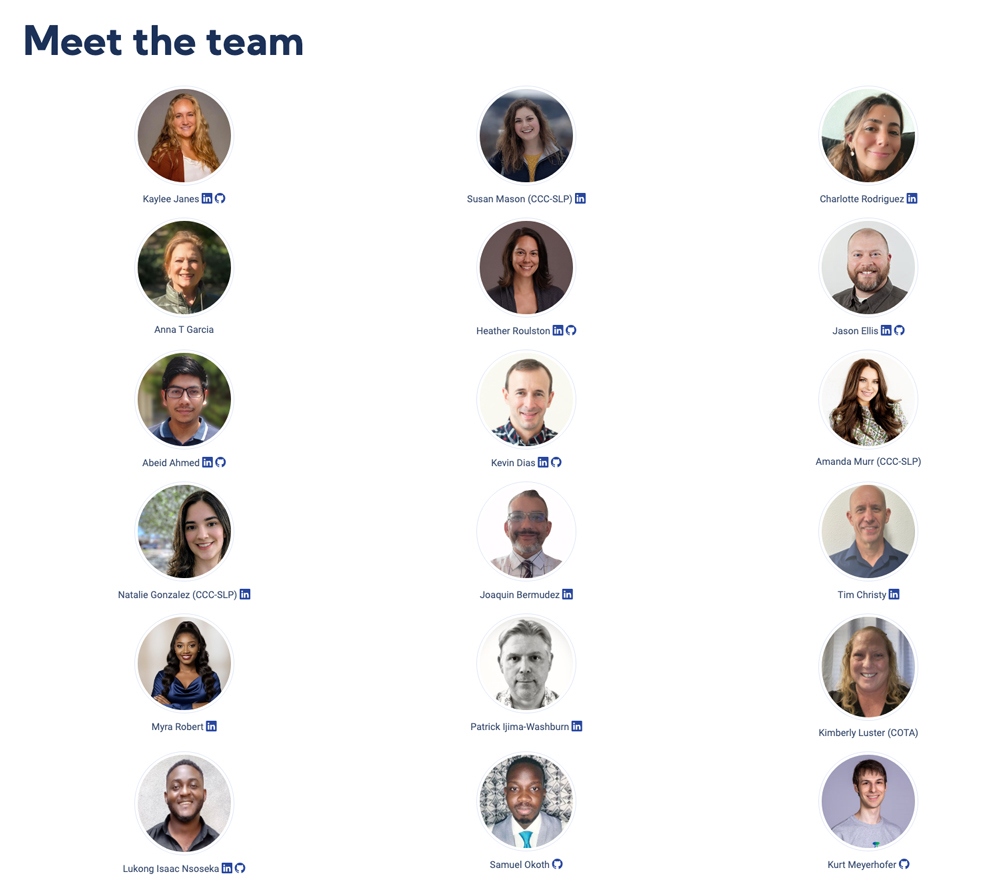
Amanda, Susan, Sam, Joaquin, Myra. They are the reason practices stay. When something breaks or confuses or frustrates, there is a real person on the other end who already knows what the practice looks like from the inside. That matters more than any feature we ship.
In a quarter where everyone else is racing to replace support teams with AI, I wanted to take a moment to say: ours is made of people, and I am proud of every one of them.