Solved yet stuck
I still think about Nakodo. It's one of my favorite things I've ever built, even though it never took off.
The name mattered. Nakodo is the Japanese word for matchmaker. That's exactly what it was meant to be.
Here's the thing about professional translators: the good ones don't just speak two languages. They live inside tiny, specialized slices of expertise. An English–Spanish translator who's spent a decade on automotive manuals can see a phrase and instantly tailor it for mechanics in Mexico City or engineers in Madrid. A Dutch–German legal translator can navigate the subtle gap between Rechtsprechung and jurisprudentie without thinking.
And yet for smaller jobs outside traditional agencies, there was no reliable way to match work to the right specialist. You could hire a generalist or lose hours searching the internet for someone qualified. It was slow. It was error-prone.
Nakodo fixed this cleanly.
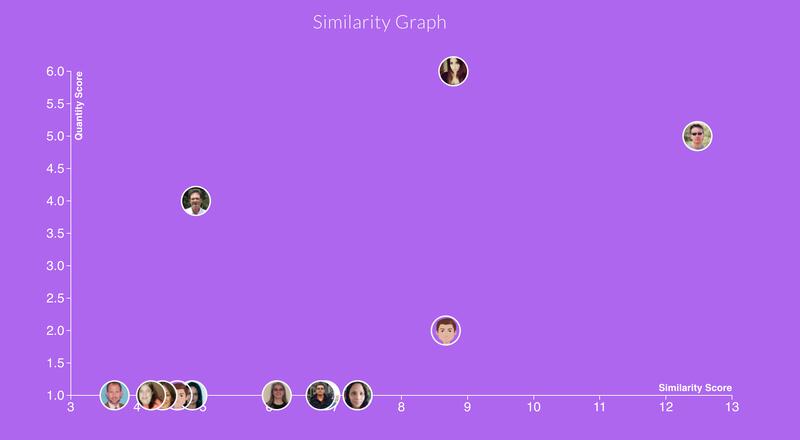
Every translator's past work lived in a private vault. Nothing was shared or exposed. When a new job arrived, we analyzed the document and surfaced the translators best suited based on what they'd actually done before. Not resume claims. Demonstrated expertise—identified using natural language processing.
You could then additionally filter by customer feedback, years of experience, availability, etc.
For the user, it was dead simple: upload a document, and we'll find the right experts.
The problem was real. The solution was elegant.
The Catch
Nakodo was a critical-mass feature. It only worked once enough translators had enough past work inside the system.
Before that threshold, the matches were thin. Upload a semiconductor document and you might get one lukewarm match—or none.
It needed network effects to thrive. And network effects don't appear just because you want them to. They require bodies in the room: translators uploading work, clients submitting jobs, enough activity to spark a flywheel.
We knew what the flywheel would look like. We just couldn't get it spinning.
Nakodo didn't necessarily need better design or cleaner code. It needed an ecosystem. And building an ecosystem is a different job entirely. It's slow. It's unglamorous. It asks for patience measured in years, not sprints.
Some features pass every validation check and still fail.
Not because the problem is imaginary. Not because the solution is weak. But because the conditions for success don't exist yet.
Chat apps with no users. Marketplaces with no buyers or sellers. Matching engines with no data.
If I wrote the feature alignment document for Nakodo today, I'd include a new question:
Does this feature require a network effect to function? And if so, how do we reach critical mass?
It's not enough to solve the right problem. The solution has to land in soil where it can actually grow.
Solving the problem is only half the job. Creating the conditions where the solution can thrive—that's the harder half.