Specific
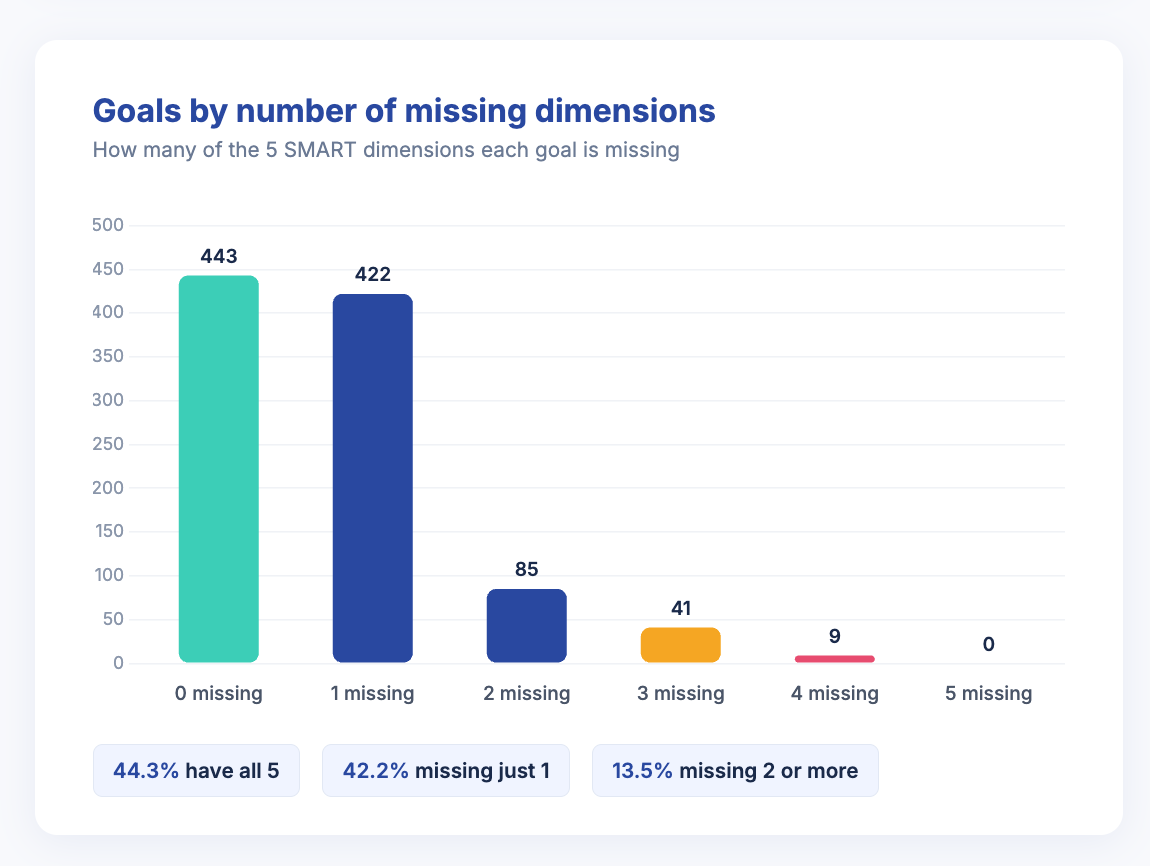
I reviewed a randomized sample of 1,000 therapy goals on Ambiki and came away more encouraged than concerned.
SMART goals have 5 dimensions:
- Specific.
- Measurable.
- Achievable.
- Relevant.
- Time-bound.
SMART is not the be-all, end-all. Therapy goals are more nuanced than a five-letter acronym. But it is still a useful guide.
44.3% met all five criteria.
The other 55.7% were missing at least one dimension, but most were very close. In fact, 42.2% of all goals were missing only one criterion: Time-bound.
And since Ambiki captures the target end date for a goal in a separate structured field, I'm inclined to give many of those a pass. The time constraint exists. It just may not always live inside the written goal itself.
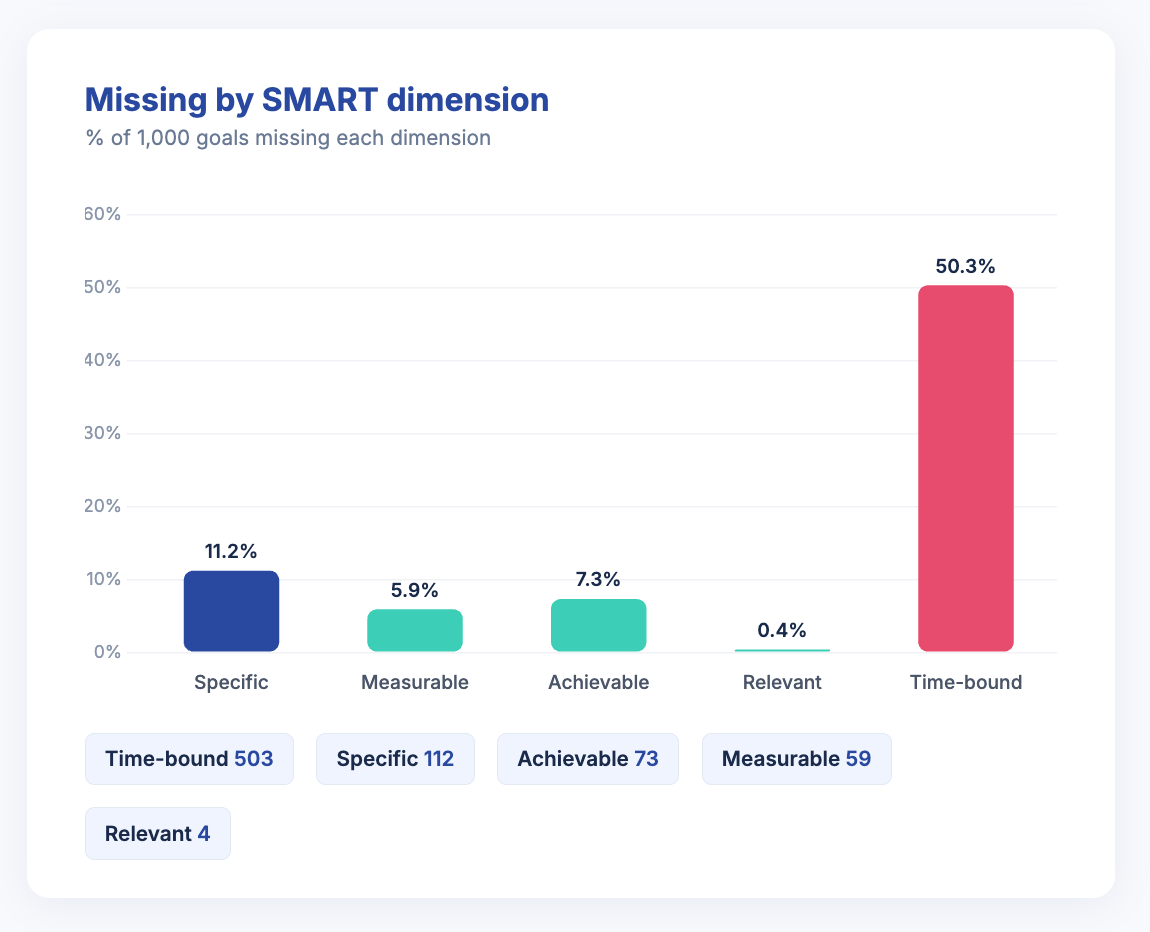
The bigger signal for me was specificity.
Roughly 1 in 10 goals in the sample were not specific enough.
My takeaway from this sample: Most goals are close.
The biggest opportunity is gently nudging therapists to double-check one thing:
"Is this specific enough that someone else would know exactly what progress should look like?"