Two-minute warning
I hate being late.
Living in Japan will do that to you. The trains here don't arrive "around 8:15." They arrive at 8:14. Platform 3. Third car from the front if you want to be near the exit at your stop. The entire country operates like a Swiss watch, and after a decade here, the punctuality has seeped into my bones.
(My wife is the exception. Don't tell her I said that.)
But here's my problem: I also hate clock-watching.
You know the feeling. You're in a meeting, finally getting to the heart of something—a tricky architectural decision, a customer problem that's been nagging at you for weeks—and part of your brain is running a background process: How much time do I have left? Should I check? If I check, will I lose the thread?
I'm terrible at this. I'd get so absorbed in the conversation that I'd completely lose track of time. Then I'd glance at the clock, realize I was already three minutes late for my next call, and scramble to wrap up while my stress levels spiked.
The irony wasn't lost on me: my fear of being late was making me less present. The very thing I was protecting was being eroded by the protection itself.
So I tried something simple.
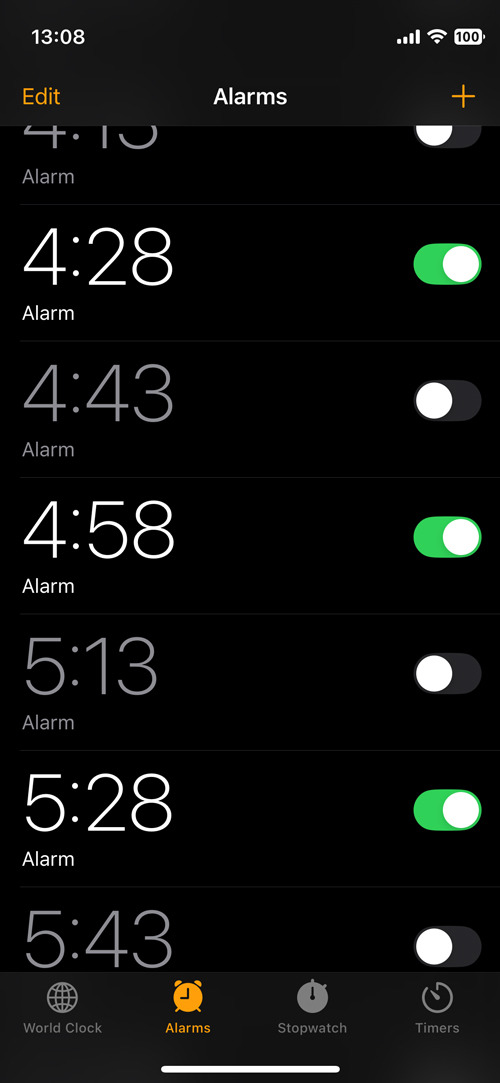
The night before each workday, I open my phone and set alarms for two minutes before the start and end of every meeting.
That's it.
Now when I'm in a meeting, I'm actually in the meeting. No background process. No split attention. When the alarm buzzes, I have a gentle runway to wrap up, thank everyone, and transition calmly to the next thing.
It's one micro-burden off my brain. Enough of those add up, and you suddenly have attention to spare for the work that deserves it. That's why I keep a to-do list: not to remember, but to stop remembering. Build the tiny systems that buy your focus back.