Until the taillights disappear
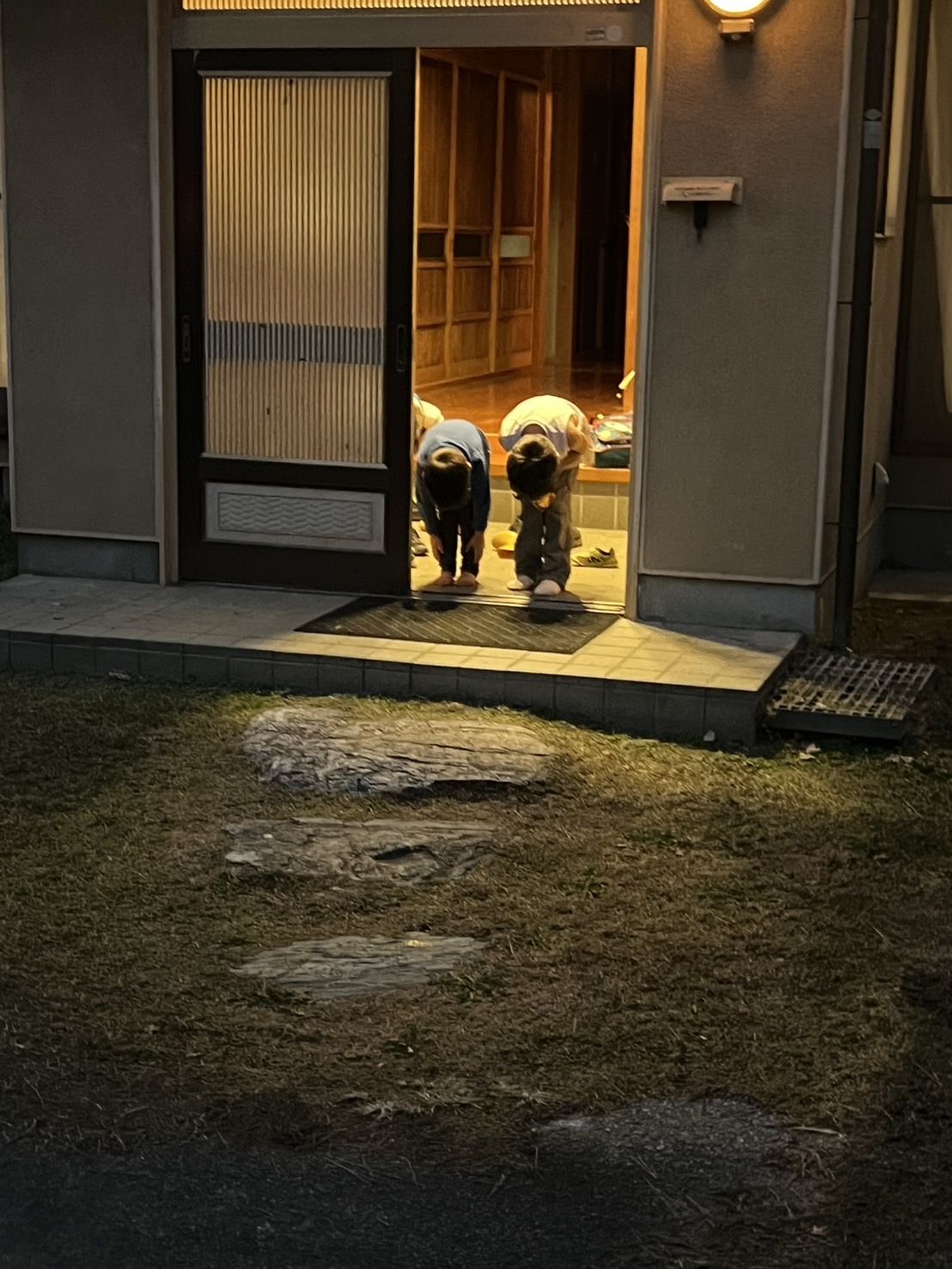
It was a Tuesday evening in Tochigi, and I was standing in our yard watching my wife teach the boys something I'd never thought to teach them.
A neighbor was leaving our house. Nothing special, just a normal visit coming to an end. But instead of the usual wave-and-close-the-door routine I grew up with, my wife had the boys lined up at the entrance, bowing.
Not a quick nod. A real bow. Held until the guest reached their car. Until the taillights disappeared down the street.
My youngest, four years old, kept peeking up mid-bow to check if he could stop yet. My wife gently guided his head back down. "Not yet. They can still see us."
I've lived in Japan since 2008. Seventeen years. And I still find myself caught off guard by moments like this. Small rituals that reveal how differently two cultures think about respect, status, and what it means to be seen.
I don't often talk about the differences between American and Japanese culture. It's complicated terrain, full of oversimplifications and exceptions. But this one keeps surfacing in my mind.
In the US, there's a constant pressure to project strength. To never let your guard down. The fear seems to be that the moment you show even a modicum of vulnerability, someone will use it against you.
Here, in seventeen years, no one has ever asked my job title. Not a neighbor. Not a dinner guest. Not even close friends.
People seem more at ease in their own shoes. Less preoccupied with how they stack up.
When I ask Japanese colleagues what they do, the answer is almost always the same: "salaryman."" Even if they're in marketing or sales or data entry or management. About 60 percent of the workforce uses the same word. No pressure to differentiate through labels.
In fact, the pressure runs the opposite direction.
The nail that sticks up gets hammered down.
Neither approach is perfect. Conformity can suffocate individuality just as easily as competitiveness can erode confidence. Somewhere in the middle is the balance.
But watching my boys bow to a departing guest, holding that posture until they could no longer be seen, I thought: there's something here worth borrowing.
The willingness to show respect without calculating what comes back. To offer gratitude without worrying it makes you look small. To let someone else have the moment, even for the thirty seconds it takes them to walk to their car.
Respect given doesn't diminish the giver.