Reconciled
The US insurance reimbursement system is simple.
Said no one ever.
I looked at insurance-billed therapy visits across Ambiki practices in calendar year 2025 and asked a basic question:
How many billing steps does it take to settle one therapy visit?
Billing steps, not the documentation, not the clinical work.
Invoiced. Paid. Denied. Adjusted. Reversed. Written off. Refunded.
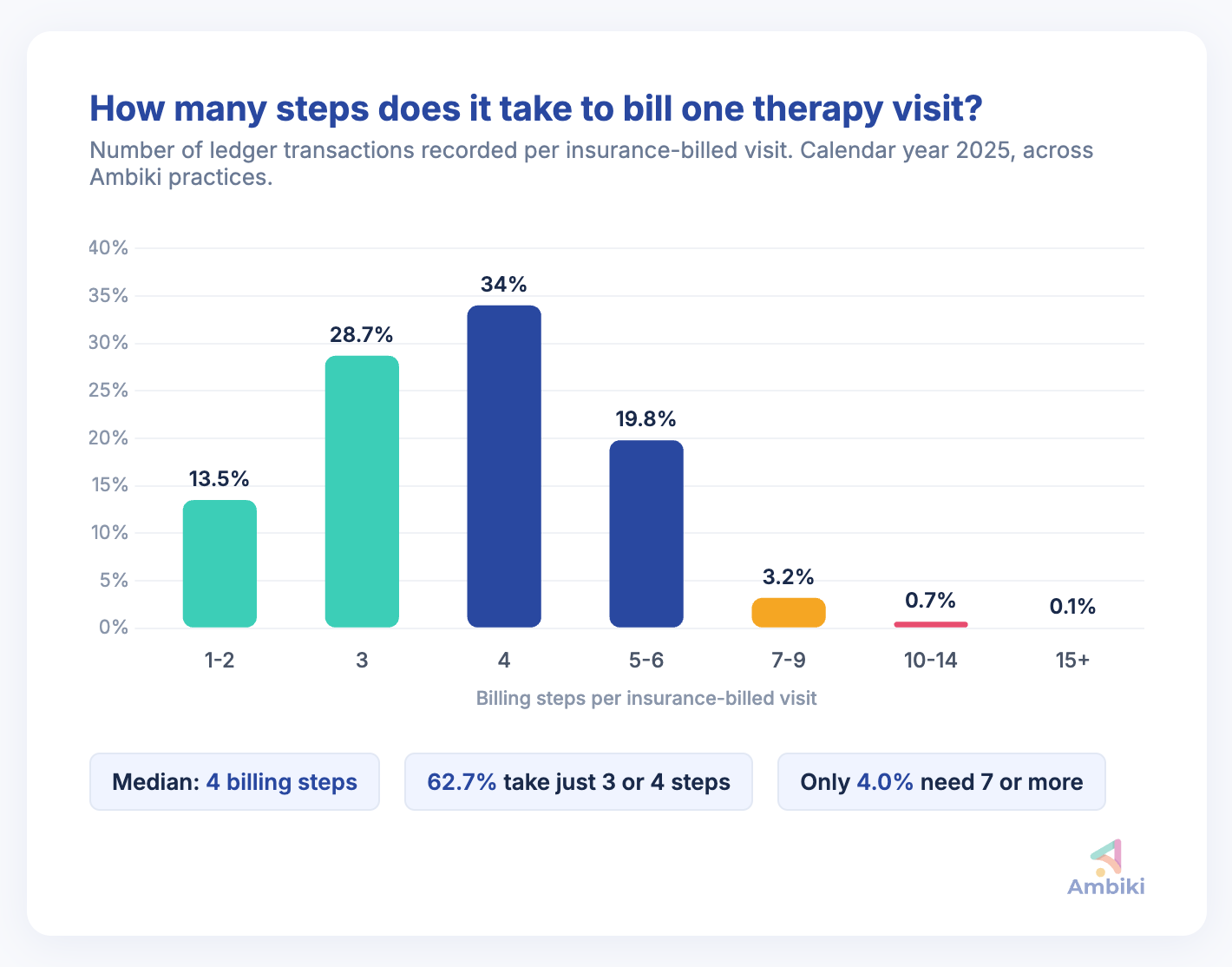
The median insurance-billed therapy visit took 4 billing steps.
And most visits stayed close to that:
62.7% took just 3 or 4 steps.
Only 4.0% needed 7 or more.
So the typical visit is not pure chaos.
But then you add a second payer.
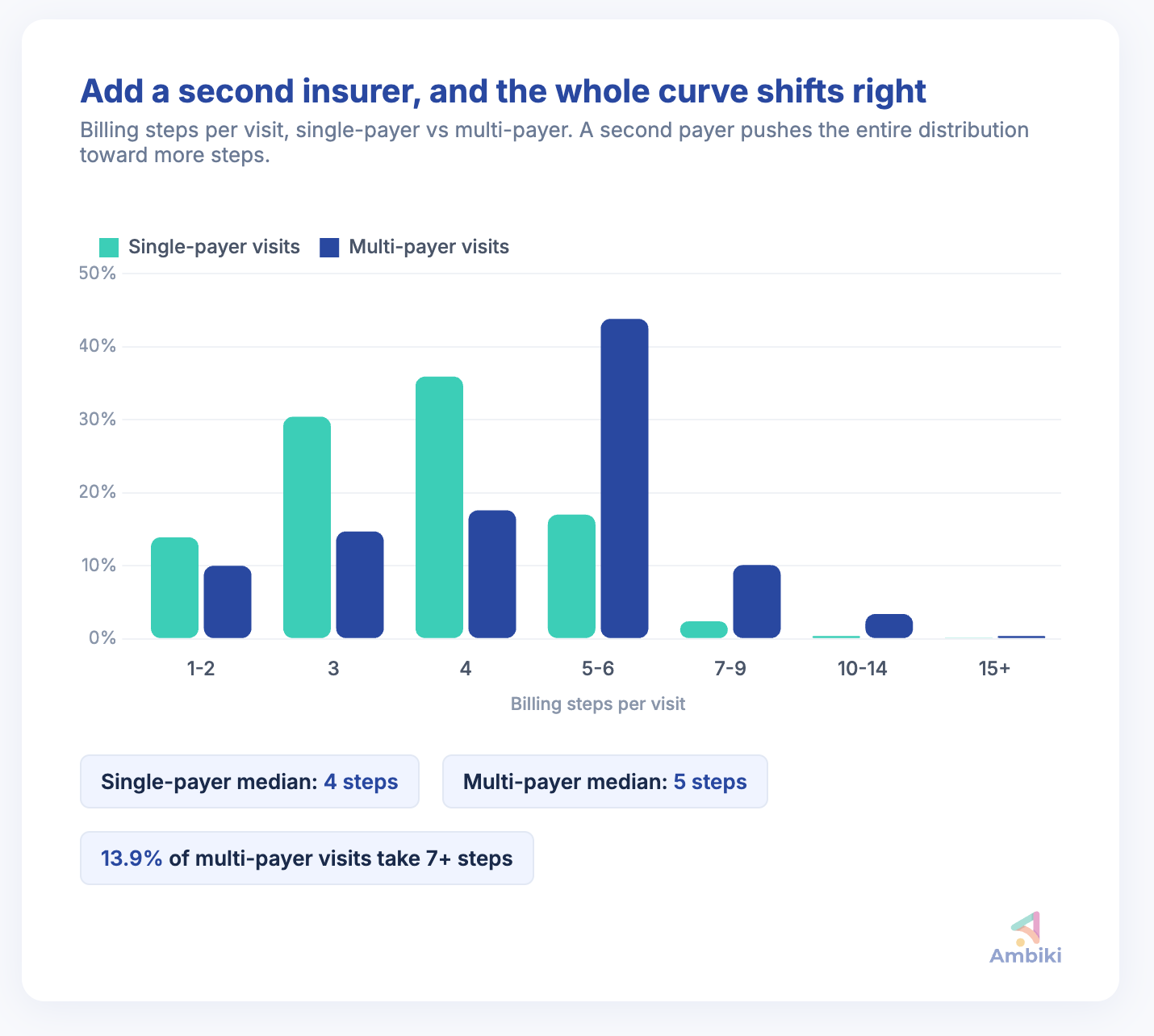
That is where the curve shifts.
About 1 in 10 insurance-covered visits involved multiple payers. Those visits had a median of 5 billing steps, compared with 4 for single-payer visits.
And 13.9% of multi-payer visits needed 7 or more steps.
That is the part that is easy to underestimate from the outside.
A visit might look done clinically.
The therapist saw the child.
The note was signed.
The claim was submitted.
But behind the scenes, the biller may still be trying to keep the books straight across:
Primary payer.
Denial or partial payment.
Adjustment.
Secondary payer.
Medicaid.
Patient responsibility.
Reversal.
Correction.
Resubmission.
Trying to track all of that by hand, or with a ledger that does not understand the full lifecycle of a visit, is chaos.
This is why Ambiki's ReconsilTM ledger is such a big deal.
It is designed around the reality that balances change as payers respond, claims move, responsibility shifts, and patient balances may need to stay pending until the insurance story is actually complete.
A pediatric therapy practice should not need a biller keeping a shadow version of the truth in their head, in a spreadsheet, or across sticky notes.
The system should do that work.
Sending the claim is the easy part.
The hard part is knowing what happened next, what changed because of it, and who actually owes what now.