The Putter King Chronicles (Part 1 of 5)
Hope
This is part 1 of a 5-part series on Putter King.
Part 1: Hope · Part 2: Hustle · Part 3: Crisis · Part 4: Transformation · Part 5: Full circle
The Yamanote line in Tokyo makes a loop. Thirty stations. Thirty-four kilometers. About an hour to complete the circle if you never get off. The green trains run every two and a half minutes during rush hour.
I rode the Yamanote line to work every day. My stop was Kanda, where I taught English at AEON. The commute was about forty minutes door to door. I usually traveled at odd hours, which meant I could often get a seat. I needed the seat because I needed the notebook open.
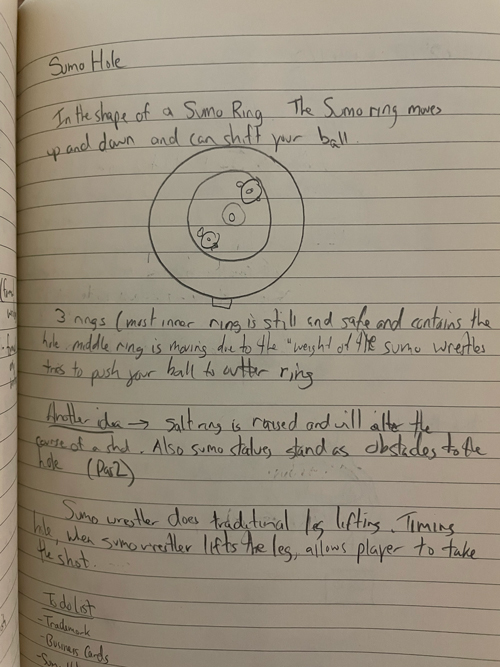
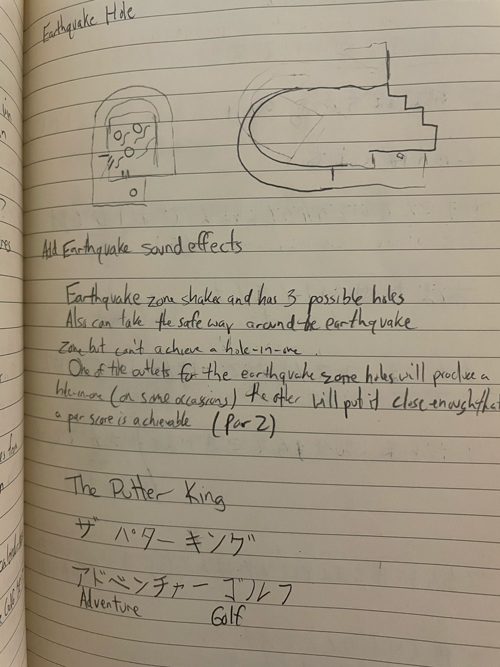
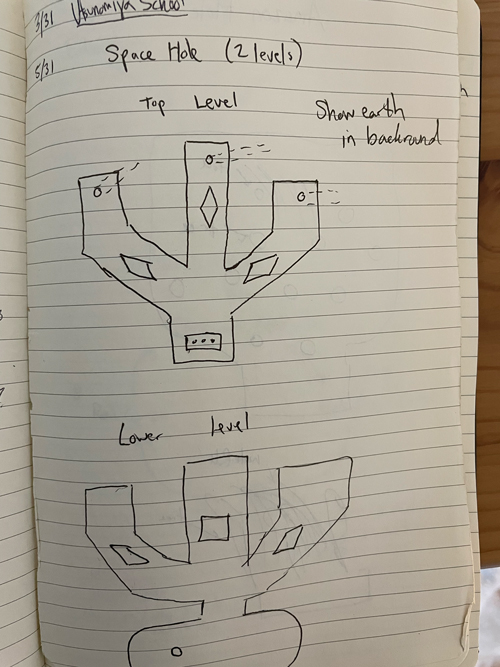
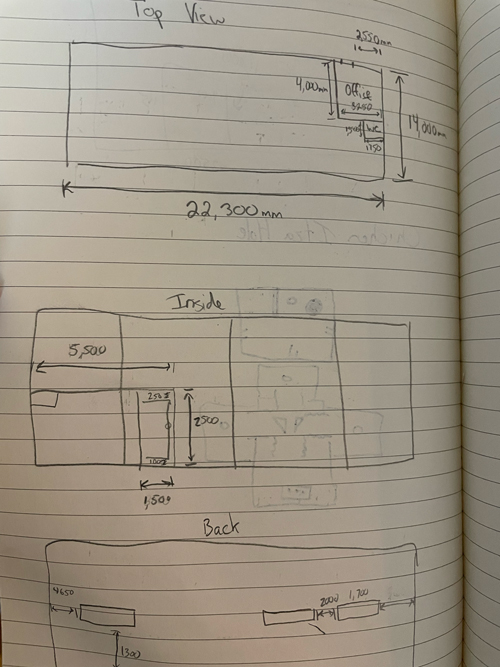
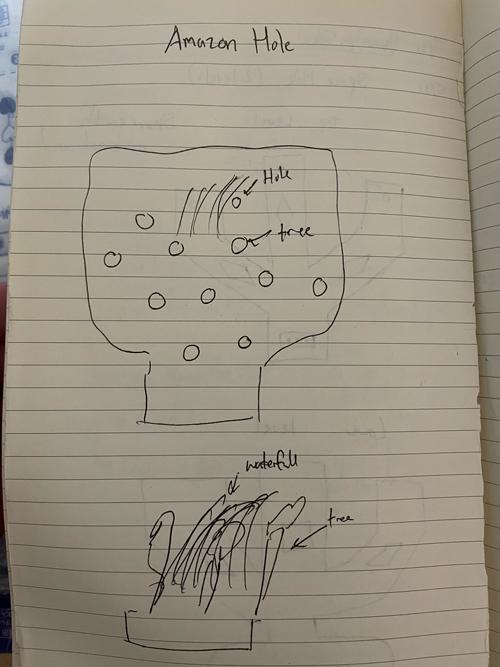
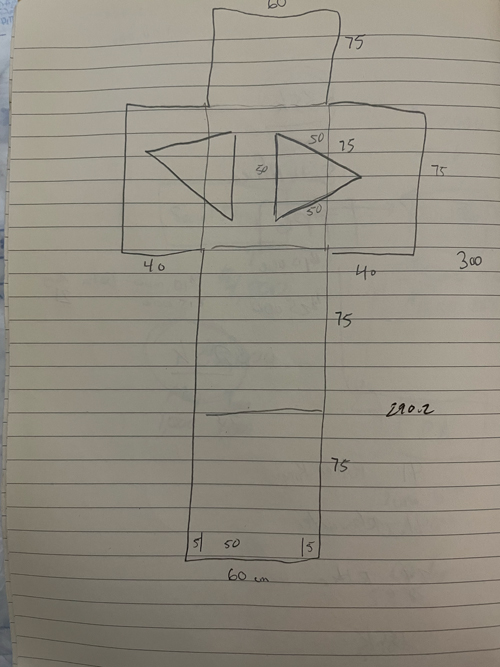
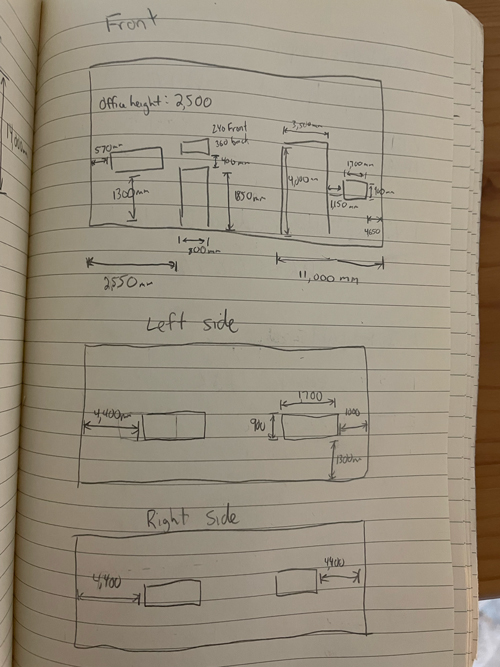
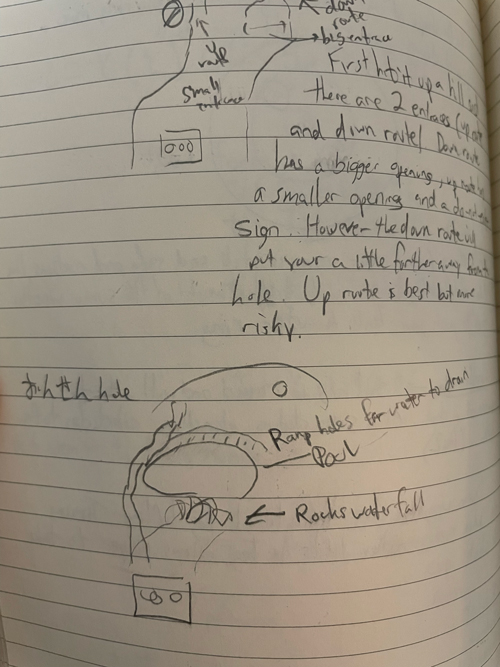
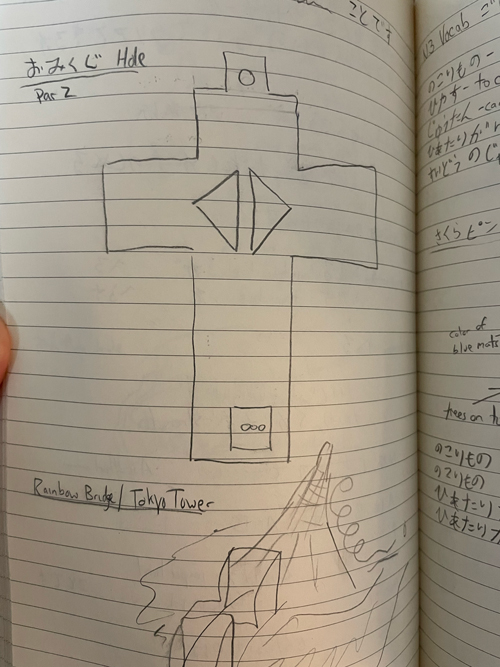
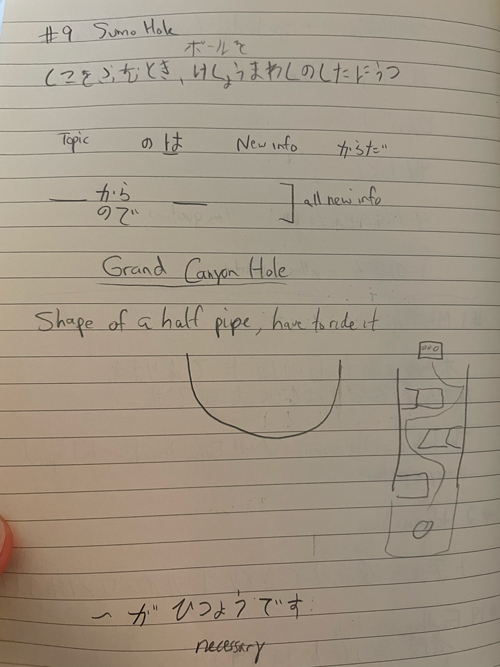
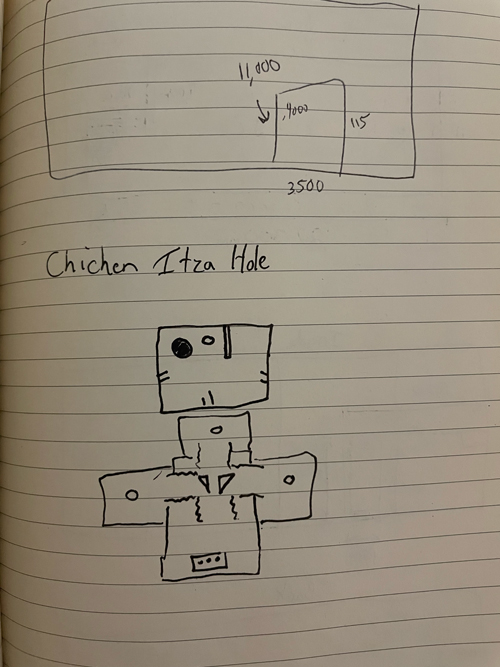
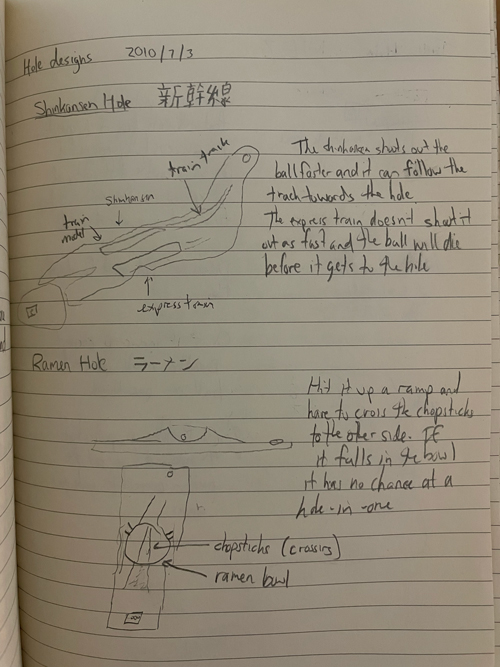
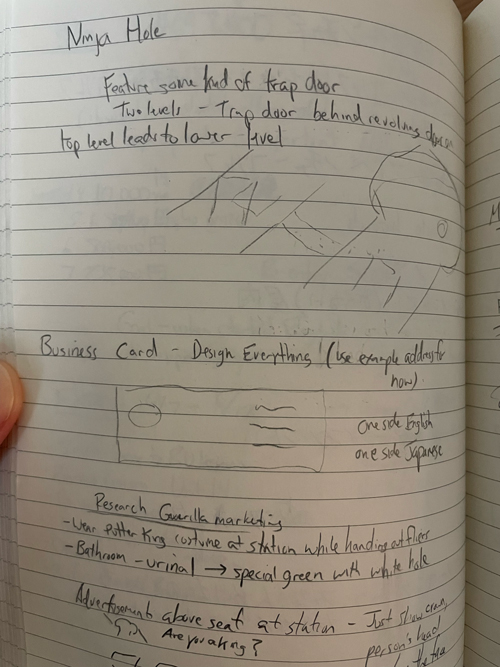
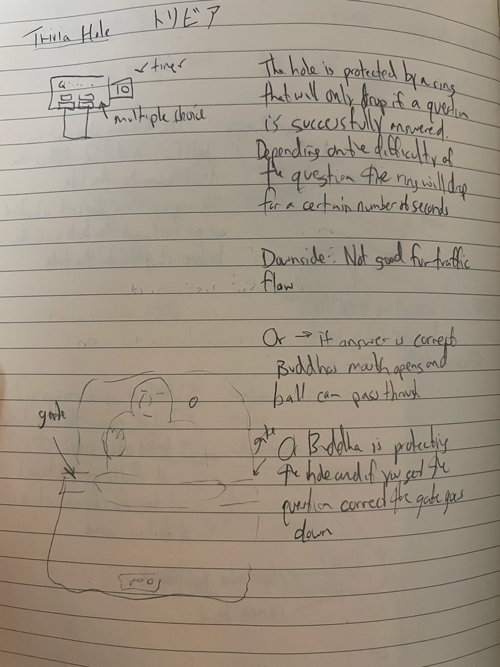
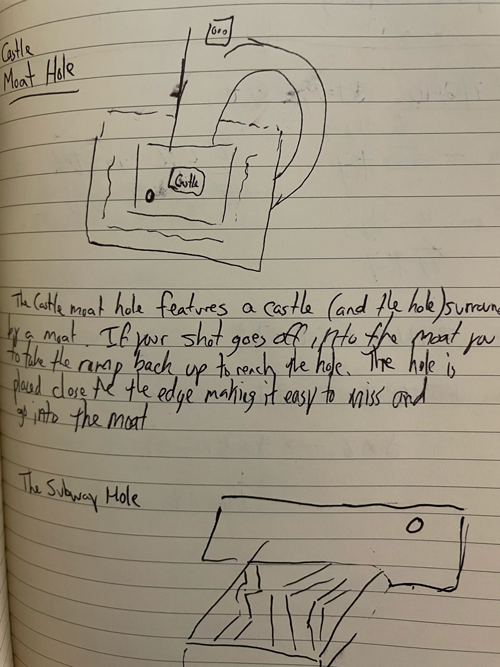
A small Moleskine. Black cover. Lined pages. I'd flip it open somewhere around Shinagawa and close it at Kanda. Twenty minutes of sketching, scribbling, little diagrams that would have made no sense to anyone looking over my shoulder.
Miniature golf holes.
Windmills. Loop-de-loops. Ramps that curved just enough to make the ball hang in the air for a half-second before dropping. Not video-game levels. Blueprints. Floor plans. Holes that people would walk through, putters in hand, on artificial turf, under fluorescent lights. I was designing a place that didn't exist yet, one page at a time, on a commuter train in Tokyo.
The idea had crept up on me over months, assembling itself from two things that had no obvious reason to fit together.
The first was miniature golf itself. Growing up, some of my happiest memories were at Baker's Golf in Lanesborough, Massachusetts. Or on the occasional trip south to the kind of place with a faded pirate ship and a concrete volcano that never actually erupted. A windmill whose blades you had to time just right. The satisfaction of watching a ball roll in a perfect arc and drop into the cup with that hollow thunk.
The second was Japan. I'd been living here for a couple of years by then, teaching English, learning the language, navigating a country that was endlessly foreign and increasingly home. Japan had a way of making you feel like anything was possible and nothing was easy, both at the same time.
The dream wasn't a phone game. It was real courses. Indoor adventure golf, built inside a warehouse, somewhere in the Kanto region.
I'd looked at the market. Japan had some outdoor mini golf scattered around (they called it "putter golf"): amusement parks, resort towns, the occasional driving range with a putting green tacked on. But nobody was doing what I'd seen growing up in the States and what was thriving in places like the UK: themed courses where every hole told a story.
A pirate cove. A haunted castle. A jungle expedition. The kind of place where a family walks in on a Saturday afternoon and walks out two hours later already planning their next visit.
There was no adventure golf franchise in Kanto. Not one. The gap in the market was so wide I kept checking to make sure I wasn't missing something.
Eighteen holes. I'd sketched them all. Nine themed around Japanese culture: a sumo match, a hot spring, a castle rampart. Nine inspired by world-famous sites: an Egyptian pyramid, the Grand Canyon, Chichén Itzá. Each hole its own little world. Each world a reason to come back and try again.
The notebook on the Yamanote line wasn't a hobby. It was the beginning of a business plan.
And then I wrote the actual business plan.
Not a napkin sketch. Not a vague idea of "someday." A detailed plan with financial projections, franchise models, and location requirements. I had the spreadsheet. I had the five-year plan.
The location I'd identified was a steel-frame warehouse near Oyama, Tochigi. It was 312 square meters, available for ¥210,000 a month. Big enough for eighteen holes with a small reception area and a snack counter. Total startup costs: approximately ¥19.5 million, about $243,000 at the time.
I know those numbers because I wrote them down. Carefully. In a document that ran to multiple pages and included sections on market analysis, competitive landscape, revenue projections, and expansion strategy. This wasn't a daydream. This was a plan to open a physical business in a country where I was still learning to read the tax forms.
Mari and I drove out to look at a warehouse.
It was for sale, within walking distance of Oyama Park, a nice park frequented by families and kids on weekends.
I could see it. The families coming in. The kids picking out their putters. The sound of balls rolling on turf, the hollow thunk of a hole-in-one, the little cheer that follows. The Putter King mascot waving from a banner near the entrance.
This was the closest the dream ever got to being a place you could touch.
I told my dad first.
This was a phone call, Tokyo to the States, the time zones making it either very late or very early for each of us. I laid out the idea the way I'd been rehearsing it in my head: indoor adventure golf, a franchise model, a warehouse near Oyama, a gap in the Japanese market nobody was filling.
There was a pause. The kind of pause that parents give when they're trying to figure out how to be supportive without lying.
"How much would it cost?"
I had an answer this time. ¥19.5 million. About $243,000. I walked him through the numbers: the rent, the buildout, the equipment. I'd done the math. I'd done it twice.
He asked the follow-up questions dads ask: where would the money come from, what happens if it doesn't work, how long until it breaks even. I had answers for some of them. The others I was honest about.
But he didn't say no. He didn't say it was stupid. He said something like, "Well, look into it and let me know."
I told friends next. The pitch wasn't polished. It was more like thinking out loud at izakayas after work, drawing on napkins, explaining indoor adventure golf to people who'd never heard of it and franchise models to people who'd never thought about them.
"So you want to open a mini golf course?"
"Indoor. Themed. Like the ones in the UK and the States. Eighteen holes, each one different. A franchise you could replicate."
"In Japan?"
"In Tochigi. Near Oyama."
Blank stares. Polite nods.
These weren't venture capitalists. These were friends and family, people who knew me as an English teacher, not an entrepreneur. The vulnerability of asking them wasn't about money. It was about showing them a version of myself they hadn't seen before. The guy with the notebook. The guy who thought he could build something.
My friend Patrick listened differently than most. He was a designer, and when I described the mascot I'd been imagining, a little character, something friendly and playful, something kids would love, his eyes changed. Not polite interest. Actual interest.
"I could design that," he said.
It was the first time the idea had jumped from my notebook into someone else's head.
Mari was patient with it. The notebook on the kitchen table. The conversations that always circled back to hole designs and franchise locations and what-ifs. She didn't tell me it was a great idea or a terrible one. She just watched me fill pages and said, "If you're going to do it, do it."
Which was its own kind of permission.
By October 2010, I was setting up investor conference calls.
Two calls. October 17th and October 24th. 9 AM Eastern, 10 PM Japan time. I'd booked the video conferencing through Dimdim. The business plan was polished. The numbers were ready. The pitch was rehearsed.
And then nothing happened. Not in the dramatic sense. Nobody said no. Nobody laughed me out of the room. There was no single moment of rejection.
The problem was quieter than that. The problem was me.
Time was passing. Weeks became months, and I kept finding reasons to wait. I needed a better deck. I needed more market research. I needed to refine the financial projections one more time. But underneath all the reasonable-sounding delays was something simpler and harder to admit: I was afraid to go out on a limb and really ask for the money.
$243,000 is an abstraction until you have to look someone in the eye and ask them to give it to you. Then it becomes the most concrete number in the world. I'd talk about the franchise with conviction at izakayas, draw the floor plans on napkins with confidence, peer in the warehouse windows with Mari and see the future clearly. But when it came time to actually make the ask, to call the investors and say I need a quarter million dollars, something in me hesitated.
I wanted something to show first. Some proof. Some momentum. Something that would make the ask feel less like a leap and more like a step.
If I could just demonstrate that the brand works. That people respond to it. That the concept has traction.
That's when I started thinking about the phone in my pocket.
The iPhone had arrived in Japan a couple of years earlier. The App Store was still young. Small teams, sometimes one person, were shipping things and finding audiences. And miniature golf games were almost nonexistent on it.
The logic assembled itself over weeks of train rides: build a miniature golf game for the iPhone. Use it to establish the brand. Generate some revenue, some downloads, some proof that people cared about Putter King. Then take that momentum back to the investors and make the real ask.
If I can't build the courses yet, maybe I can build the game. And maybe the game can build the courses.
It wasn't a rejection pivot. Nobody had told me no. It was a "let me prove this first" pivot, the kind of detour that feels strategic in the moment and only later reveals itself as a fork in the road you can't come back from.
The business plan had no mention of an iOS app. It was a franchise document: locations, buildout costs, foot traffic projections. The app was something new, something grafted on, a stepping stone that I convinced myself would lead back to the warehouse in Oyama.
By early 2010, the notebook was getting thick. I'd sketched dozens of holes, some for the physical courses, some now reimagined for a screen. I'd researched developers. I'd looked into what it would cost to incorporate a company in Japan, because somewhere along the way the idea had graduated from hobby to plan.
I still rode the Yamanote line every morning. Still taught at AEON in Kanda. Still walked through the ticket gates at Osaki in the evening and climbed the stairs to my apartment.
But something had shifted. The train wasn't just a commute anymore. It was twenty minutes of protected time where the dream was real, where the windmills spun and the balls rolled and the little mascot Patrick was starting to sketch waved from a screen I hadn't built yet.
I didn't know what was coming. The developers who would take my money and disappear. The earthquake that would rearrange everything.
All I knew was the loop. The green train. The notebook. The feeling that the gap between what I was doing and what I wanted to be doing was about to close.
The Yamanote line makes a circle. You always end up back where you started. But every time around, the view is a little different.
I was going around again. And this time, I was going to get off at a different stop. The notebook sketches that had started as blueprints for real courses, holes people would walk through with putters in hand, were becoming designs for virtual ones. The warehouse near Oyama park was receding behind me, and a screen the size of a playing card was pulling me forward.
I told myself it was temporary. A stepping stone. Build the game, build the brand, then build the courses.
The Yamanote line makes a loop. But not every loop brings you back to where you meant to go.
This is part 1 of a 5-part series.
Part 1: Hope · Part 2: Hustle · Part 3: Crisis · Part 4: Transformation · Part 5: Full circle