The Putter King Chronicles (Part 3 of 5)
Crisis
This is part 3 of a 5-part series on Putter King.
Part 1: Hope · Part 2: Hustle · Part 3: Crisis · Part 4: Transformation · Part 5: Full circle
The first sign of trouble from SocialJunction* should have been a warning.
It was February 2011, barely a month after I'd signed the contract and paid $4,500 via Google Checkout for a 3D miniature golf game. The project manager sent a meeting request. Something about a "licensing issue" with Adobe Air that they needed to discuss.
I read the meeting request on my phone during my morning commute. The Yamanote line was packed, and I was wedged between a salaryman reading a newspaper and a high school student asleep on her feet. I read it twice.
What does this mean?
On the call, they explained the real issue: Adobe Air apps risked being rejected from the App Store. It wasn't that their contract had expired or that they'd done anything wrong. It was that the technology they'd chosen to build on had become unreliable (if you'll recall at that time Adobe and Apple were not the best of friends). They couldn't guarantee the app would ever make it to users.
Addy, the project manager, offered a full refund right there on the call. On paper, that sounds clean: a problem, a solution, move on. In practice, the refund became its own project. They promised the money would be transferred "asap."
It wasn't.
Weeks of emails. Then months. I escalated to their director in April. They offered a payment plan: $500 a month. Every alarm bell should have been ringing. Partial PayPal refunds trickled in over the summer. A Google Checkout chargeback complicated things further. At one point, the director claimed the $4,500 had been passed to the next developer as a "referral fee," which the developer flatly denied. The whole mess didn't resolve until November, nine months after they'd first promised a refund.
Four thousand five hundred dollars. I could absorb the loss. But it should have been a warning, and I didn't fully hear it because I was already talking to someone else.
What I did hear, without fully realizing it, were the lessons. Nine months of chasing that refund had taught me something about persistence, about saving every email and every chat log, about building a paper trail that could survive someone else's version of events. These weren't skills I was born with. They were skills I'd built from my first failed venture, LED Luminosity, that had taught me the hard way what happens when you don't get things in writing. That experience had burned a simple rule into me: when things go wrong, and they will go wrong, you need documentation.
A man I'll call Leon Sharp* ran a company I'll call SocialBridge*. He came through SocialJunction's network. When SocialJunction couldn't deliver, they recommended their subcontractor. Leon was already familiar with the project because his team had been doing background work on it.
SocialBridge was (supposedly) different from SocialJunction. Bigger. More professional. A real portfolio. Leon talked about the project with the kind of confidence that makes you feel like you're in good hands. He understood 3D games. He understood the App Store. He understood what I was trying to build. The total contract was $50,000 for a complete miniature golf game, broken into milestones: 10% mobilization, 10% after the demo, 25% after twenty-four working holes, 25% after beta, 25% after app store acceptance, 5% after hole design contests.
This contract was deliberately more detailed than SocialJunction's. The milestone structure, tying payments to specific deliverables rather than dates, was me working backwards from the worst-case scenario. My own business plan had literally warned me: if things go wrong, you need to have limited your exposure.
I didn't learn this until later: according to SocialJunction's director, Leon and his partner had originally quoted the project at $35,000. The contract I signed was for $50,000. If both numbers are true, Leon was pocketing a $15,000 markup before a single line of code was written, while positioning himself as my ally against the company that had just failed me.
And despite his aggressive posturing against SocialJunction during the refund process, Leon had an ongoing business relationship with them. They'd done over $12,000 of work together on other projects. His outrage on my behalf may have been entirely performative, a way to gain my trust while the referral fee changed hands behind the scenes.
I believed him because I needed to believe him. I was desperate to make this work, desperate to build something that would let me leave English teaching behind. That desperation made me the perfect mark. It's a pattern scammers know well: the people most vulnerable are the ones in a tough spot, clinging to the hope that this time, this person, this opportunity is the way out. When you need the door to be real, you stop checking whether someone painted it on the wall.
The mobilization payment was $5,000. Check number 255, dated March 14, 2011. Two weeks later, the demo payment: $5,000. Check number 256, March 28, 2011.
Ten thousand dollars in two checks over two weeks.
I remember writing the second check and feeling the physical weight of it. Not the paper, which weighed nothing, but the commitment it represented. This was friends-and-family money. People who trusted me. My parents. This wasn't venture capital I could write off as someone else's risk.
For a few weeks, things moved. Updates came in. Progress reports. Screenshots that looked promising. I forwarded them to my dad, to anyone who'd been part of the dream. Look. It's happening.
Then the updates slowed. Then they stopped.
I knew Leon had a team. Since SocialBridge had come through SocialJunction's network, I'd seen some of the people involved, including a game studio called Tasty Poison Games. Their lead developer, Steve, had been CC'd on emails from the start, sending sample images, designing courses, doing the real work. What I didn't fully grasp yet was that Leon was a pure middleman, a person between me and the person actually building my game, collecting money and producing nothing. SocialBridge was essentially another middleman layer, just like SocialJunction had been. The pattern repeated itself: a business guy takes the contract, subcontracts the real work, and skims off the top.
In early March, Leon's team had sent a detailed statement of work that should have been another warning sign. Nearly every feature I'd discussed was flagged as "extra work" or "not in the original scope." It was classic groundwork for extracting change orders and additional fees later, a way to get the contract signed at one price and then inflate it once you're committed.
On May 20, 2011, I complained about the lack of updates. Leon apologized. He explained he was "raising a large round and scaling operations to 30 full-time people" and had "literally had zero free time." His advice: "Whatever date we give you for launch, you should always add at least one month as a cushion."
A week later, the emails turned. The timeline tells you why. The contract kicked off on March 14. By mid-May, the twenty-four-hole demo milestone was due. The deliverable was either inadequate or missing. I did what any reasonable person would do: I held back the next payment until I saw something that matched what I'd been promised. Leon's cash flow depended on my payments flowing regardless of quality. When they didn't, he snapped.
On May 27, Leon sent an "ROI Analysis" that laid bare what had been true all along: his priority was a VC demo day on July 30. Putter King was a distraction. He offered me three options, all of which involved paying him more money, between $10,000 and $20,000, to continue work he'd already been paid to do. He closed with a suggestion that felt like a threat wrapped in a smile: "I will be sitting on large piles of available cash soon and have your business plan in my hands, so please keep that in mind."
What followed was unlike anything I'd experienced. On May 27 and 28, Leon sent a barrage of emails that escalated from hostile to unhinged. Seven within about forty minutes on May 27, then a final warning the next morning.
It started with a threat dressed as a joke: "I hope you're prepared to meet my attorneys, $700/hour... lol, this is how I roll."
By 2:36 a.m. the next morning, the mask was off: "Prepare to have your dreams crushed for being a horrible individual and client."
He threatened to hire private investigators to dig into my past. He threatened to destroy my reputation through PR. He claimed to know where I worked. He threatened to violate our NDA. He told me to Google "Putter King" in ten hours to "see what shows up," a threat that suggested he'd posted defamatory content or SEO-bombed the brand name as retaliation. The behavior of someone who has lost control and is lashing out.
He wrote: "This is a chess board, you're a pawn, and I decide your next move."
At 2:43 a.m.: "You have 10 hours to call me before we take action." At 2:45 a.m.: "At this point it's personal. I am taking money out of my savings to pay for the suit. I will not only get to keep the money you paid, but also collect the rest."
His own words betrayed the scheme. "You know that Steve needs to pay his bills right?" confirmed that Steve, the actual developer, hadn't been fully paid. Leon was using my milestone payments to pay Steve incrementally and keeping the difference. If the business was legitimate and profitable, why would he need to dip into personal savings for a lawsuit?
The next morning, May 28, Leon sent one more email. Subject line: "Consulting." In it, he suddenly pivoted to offering a "Putter King assessment," as if the previous night hadn't happened. It read like a sober-morning attempt to walk back the damage and re-establish leverage by positioning himself as still needed.
It was somewhere around the fourth or fifth email that I realized this wasn't a negotiation. This was a man who had taken $10,000 of my money, failed to manage the project, and was now trying to intimidate me into paying more. I didn't fire back. I didn't match the tone. I saved every email, every timestamp, every threat.
On June 10, the final email arrived. Subject line: "Weak minded businessman." The body opened with rap lyrics about setting a trap, then got to the point: "We'll be issuing a lawsuit for the rest of the payment amount, $40,000."
He wanted the remaining $40,000 on a $50,000 contract for which he had delivered nothing usable to me. No working alpha I could download. No milestone completed to my approval. Just threats, profanity, and a demand for more.
The lawsuit never materialized. The attorney he name-dropped never called. Like everything else Leon promised, it was noise designed to intimidate.
Looking back, I was the mark in a chain of middlemen. SocialJunction skimmed $4,500 and produced nothing. SocialBridge took over, marked up the actual development costs, and when I applied the same financial discipline that had protected me the first time, milestone-based payments, holding back when deliverables were lacking, the scheme fell apart and Leon's facade cracked.
The money was gone.
Yes, the milestone-based payment structure limited my losses to $10,000 instead of $50,000. That part worked. But the honest story is that I still lost $10,000 because I was desperate for this project to succeed and I plowed through every red flag along the way. I'd just spent nine months fighting SocialJunction for a refund, and instead of letting that experience make me cautious, I handed money to another middleman with the same structure. Leon's statement of work flagged half the project as "extra work" before we'd even started. He told me himself he had literally zero free time because of his own fundraising. I saw all of this and kept going, because I wanted so badly for someone to just build the thing. The milestone structure was a guardrail I'd been smart enough to install, but I was the one who kept driving toward the cliff.
On March 11, 2011, three days before I wrote that first check to Leon Sharp, the ground had shaken.
The Great East Japan Earthquake. Magnitude 9.0. I was in Tokyo when it hit, and for six minutes the world moved in ways that made you doubt the permanence of everything. The aftershocks went on for weeks. The nuclear crisis at Fukushima filled the news with words like "meltdown" and "exclusion zone."
By April, I had moved to Tochigi (to my parents' dismay, closer to the disaster zone). A new teaching position, a smaller city, a different pace. The apartment was quiet in a way Tokyo never was. At night you could hear insects instead of trains.
It was in that apartment, in the stillness of Tochigi, that the threatening emails arrived. And it was from that apartment that I called my dad.
The countertop conversations happened over months, not all at once. Skype calls, my dad at his kitchen counter in the States, me at the small table in my Tochigi apartment.
He never yelled. He never said "I told you so." That would have been easier to handle, honestly. Instead, he asked questions.
"How much total?"
I added it up. $4,500 to SocialJunction. $10,000 to SocialBridge. The incorporation fees. The trademark filing. The website. The mascot costume. The manufacturing. The email accounts and the domain and the hundred small expenses that felt reasonable one at a time and devastating in aggregate.
"And the app?"
"Doesn't exist. Not in any form I can use."
That was the hardest sentence. All of it, the company, the trademark, the website, the mascot that drew crowds at Nikko, the hole designs in Google SketchUp, the notebook full of windmills, all of it was infrastructure for a product that didn't exist. A miniature golf game that no one had ever played because no one had ever finished building it.
My dad was quiet for a long time. The kind of quiet that has weight.
"You have to be careful, Kevin."
He meant with money. He also meant with hope. He'd watched me pour myself into this thing, watched me convince friends and family it was real, watched me write checks to strangers on the other side of the world. And now he was watching it not work.
The concern in his voice came from love doing the only thing it could do from that distance: worry.
"I know," I said. And I did.
But knowing and stopping are different things.
I almost did. Stop, I mean.
There were mornings in Tochigi when I'd open my laptop and look at the SketchUp files, the holes I'd designed, the ramps and windmills and loop-de-loops, and think: These are just drawings. They'll never be anything more than drawings.
The notebook sat on the table, still thick with plans, but the plans felt like artifacts now. Evidence of a person who believed something that turned out not to be true.
I could have closed it. Could have told my dad he was right, told Patrick and Evan that it had been a good run. Could have gone back to just teaching, just riding trains, just being the person everyone expected me to be.
But there was something I couldn't shake. The money was already gone, and pride had been burned out of me by two failed developers. This was something smaller and more stubborn.
The holes were good.
I knew the holes were good. The windmill timing. The ramp physics. The way each course told a little story through its obstacles. Whatever the developers had failed to build, the designs themselves were sound. The game in my head was a good game. It deserved to exist.
One more try.
In the Putter King business plan, under a heading called "Lessons Learned," I'd written about LED Luminosity and quoted Henry Ford: "Failure is only the opportunity to begin again, only this time more wisely." When I wrote that, it was theory. A nice sentence borrowed from a famous man, placed in a business plan to show investors I was self-aware. Now it was about to become practice. Everything I'd learned the hard way, the documentation, the composure under fire, the milestone payments, the instinct for risk, was about to pay off in the most important decision of the entire project: cutting out the middleman and going direct.
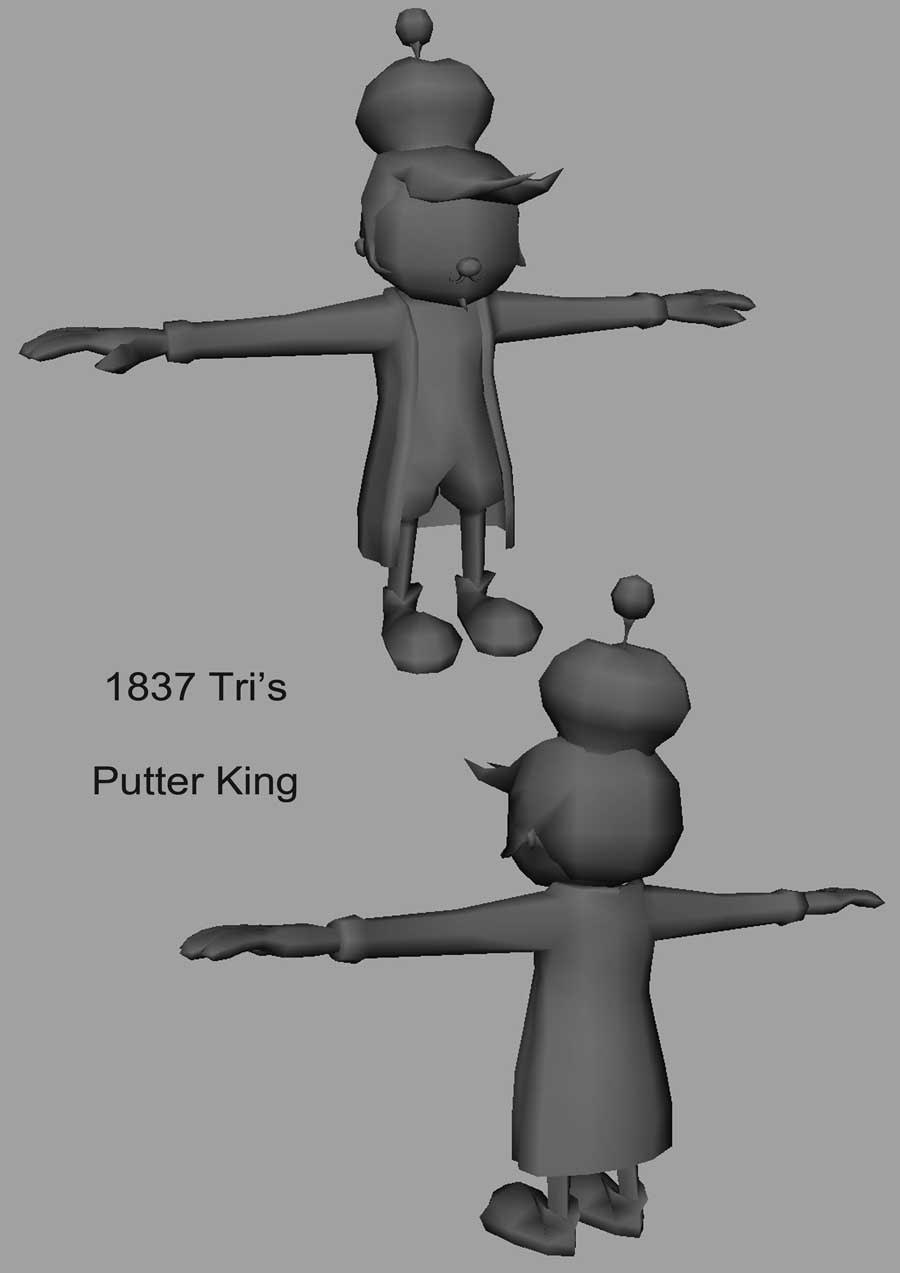
Steve, the developer at Tasty Poison Games, had been doing the actual work on Putter King from the beginning. He'd been CC'd on the earliest emails, designing courses and sending sample images back in April. He was the one building the game while Leon was raising rounds and scaling to thirty people and threatening lawsuits. When Leon told me our relationship had "become toxic" and handed the project to Steve, he was admitting what I should have seen months earlier: Steve was the real partner. Leon was just the man in between, collecting money and producing chaos.
Over the summer, as the threats faded into silence, I started talking to Steve directly. No middleman. No grand promises. No slick portfolio presentations. Just a clear understanding of what I needed and an honest assessment of what it would take.
The conversations were technical in a way the others hadn't been. When I described a hole design, Steve asked about the physics. When I explained the camera angles I wanted, he talked about rendering constraints. He pushed back on things that wouldn't work. That had never happened before.
Pushing back was, paradoxically, the first sign of competence. SocialJunction had said yes to everything. Leon had said yes to everything. And neither of them had built anything. Steve said "that won't work, but here's what will," and suddenly I was having a conversation instead of a sales pitch.
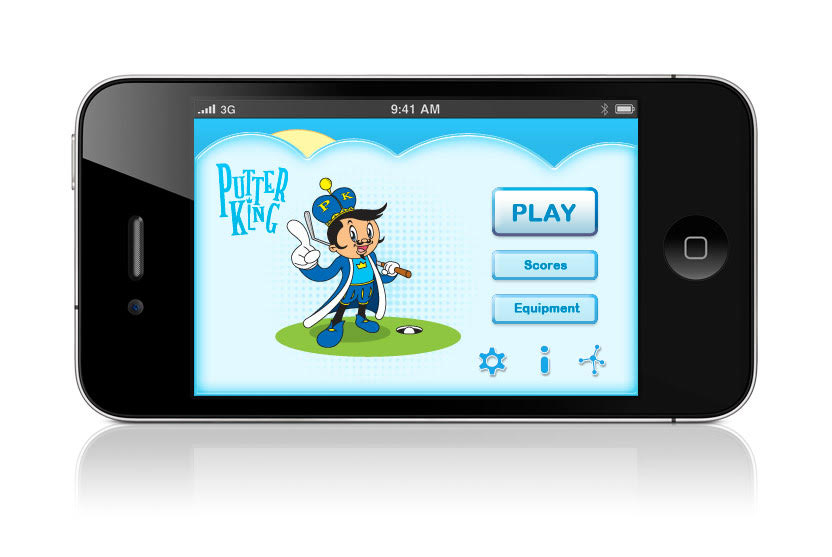
By September, we'd arranged direct payments: $15,000 total, split into $7,500 for the iPhone release and $7,500 for Android. Payment tied to deliverables, because I'd learned that lesson twice. No formal contract this time, just an agreement between two people who'd already been working together and knew what the other could do.
I'd spent months searching for the right developer, and he'd been CC'd on my emails since April. All I had to do was cut out the middleman.

And one more thing was forming. An idea that had nothing to do with the app itself.
Sitting in the apartment in Tochigi, the insects loud outside the window, I started writing something new in the notebook. Instead of hole designs or business plans, I was scribbling ridiculous, wonderful, impossible challenges. Take a picture with six different colored mini golf balls. Get autographs from professional miniature golfers from two different countries. Build your own full-size miniature golf hole.
A scavenger hunt. I had no idea what it would become, that it would connect me to Richard in the UK, Allan in Sydney, and Pat in the States, or lead to a blindfolded ace and an 18-meter ramp shot. It became the best thing I ever built, and at the same time, the worst marketing campaign I ever ran.
All I knew was that the app was finally, actually, being built by someone who could build it. And I wanted something to go with it, something joyful, something that had nothing to do with money or downloads or proving anyone wrong. I picked up the notebook and started a new page.
This is part 3 of a 5-part series.
Part 1: Hope · Part 2: Hustle · Part 3: Crisis · Part 4: Transformation · Part 5: Full circle
* I've changed the names of the first two development companies and their principals in this story. They don't deserve the publicity.